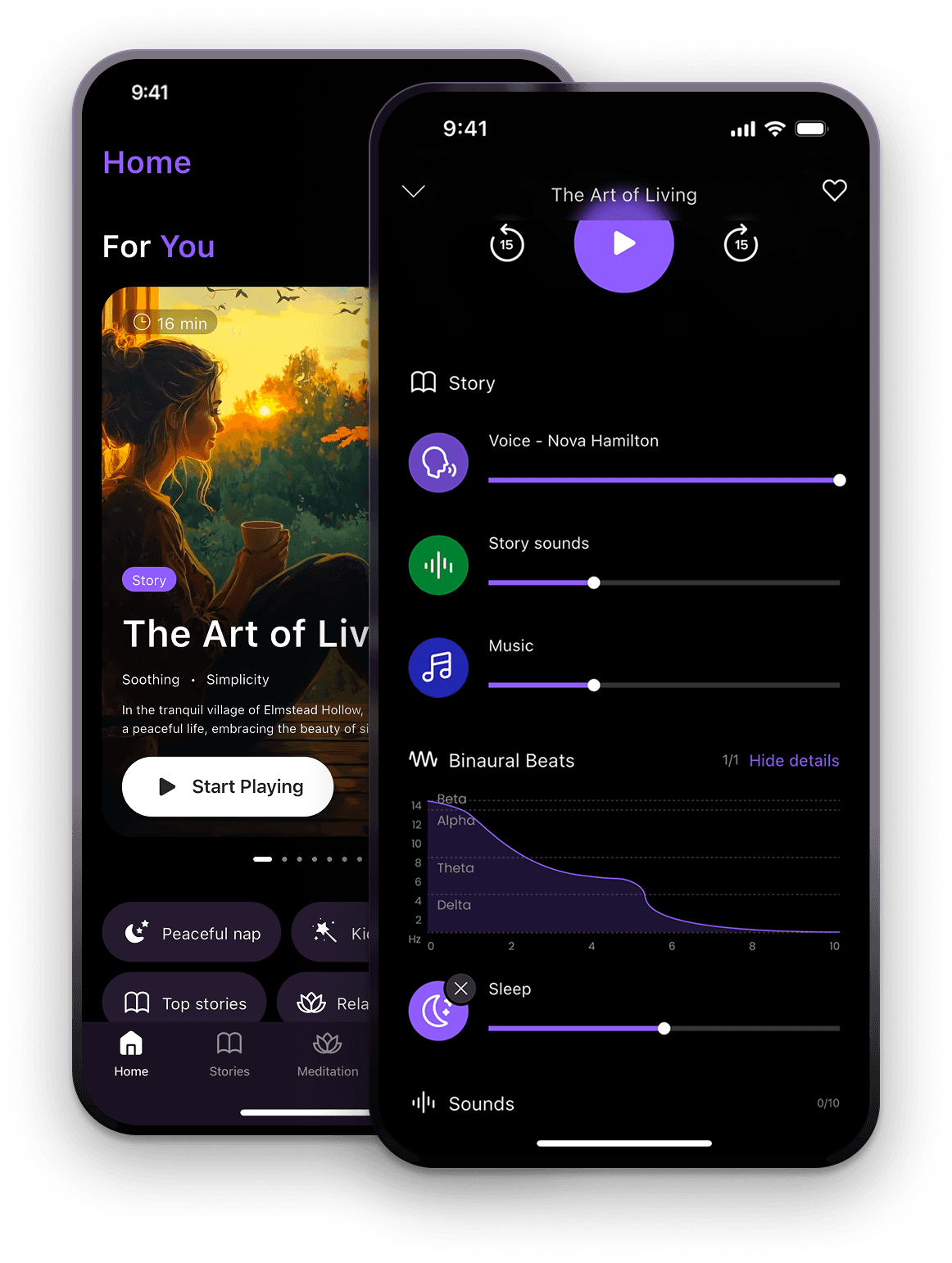
Unlock the full experience
Get full access to stories, meditations, soothing sounds, and binaural beats with our plus+ Subscription.
Start your 7-day free trial now




7-days free
Start your 7-day free trial now
7-days free
Blog / Progressive Muscle Relaxation: A Step-by-Step Guide
Progressive Muscle Relaxation (PMR) is a scientifically validated technique that involves systematically tensing and releasing specific muscle groups to reduce physical and psychological tension. Originally introduced by American physician Dr. Edmund Jacobson in the 1920s, PMR is now widely recommended in clinical settings for managing insomnia, generalized anxiety, and stress-related disorders.
Jacobson, E. (1938). Progressive Relaxation. University of Chicago Press.
Stress triggers the sympathetic nervous system, putting your body in a constant state of “fight or flight.” PMR works by stimulating the parasympathetic nervous system, which activates the “rest and digest” response. This transition lowers heart rate, reduces muscle tension, and calms the autonomic nervous system.
Clinical research supports its effectiveness:
A 2021 meta-analysis published in Sleep Medicine Reviews concluded that PMR significantly improves sleep quality and reduces sleep latency in individuals with insomnia. Dolbier et al. (2021). The efficacy of PMR for insomnia: A meta-analysis. Sleep Med Rev.
PMR is frequently used in Cognitive Behavioral Therapy for Insomnia (CBT-I), endorsed by organizations like the American Academy of Sleep Medicine and the National Sleep Foundation. National Sleep Foundation (2022). Non-medication sleep interventions.
Find a quiet space. You can lie down or sit comfortably. Each step involves a 5–7 second muscle contraction, followed by a 15–20 second release. Breathe slowly and deeply throughout.
Adapted from Bernstein, D.A., & Borkovec, T.D. (1973). Progressive relaxation training: A manual.
PMR can be practiced:
🔎 Harvard Medical School (2020). Relaxation Techniques for Health: What You Need to Know.
NightWhisper offers guided PMR meditations in the “Meditation” section. These are designed for beginners and advanced users alike, helping you:
Try pairing “Progressive Relax” with the “Twilight Glow” soundscape for optimal effect.
Share article